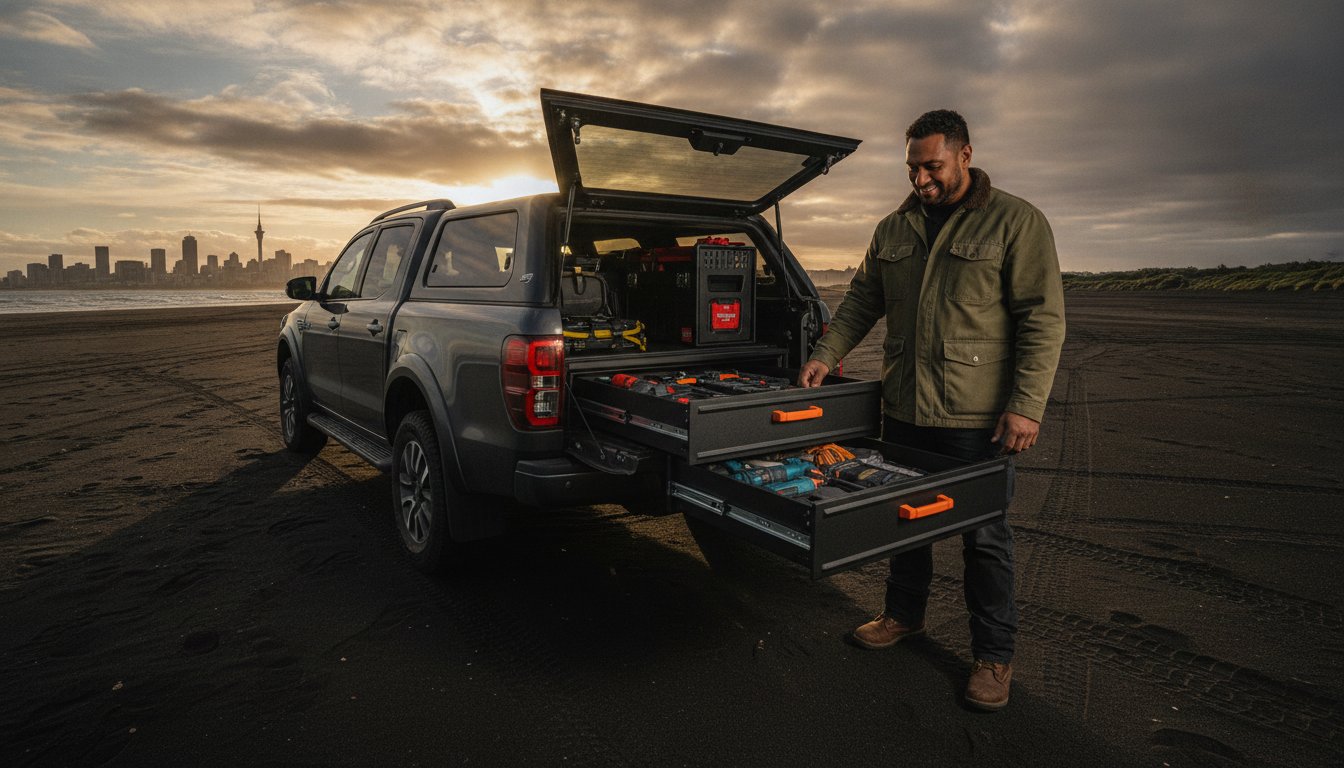

Did you know that a four-wheel-drive or SUV is more than twice as likely to roll over in a crash compared to a standard passenger car? This statistic from the LVVTA highlights the critical role your vehicle’s suspension plays in maintaining stability. Whether you are battling body roll on Auckland motorways or dealing with a rear end that sags under the weight of heavy toolboxes, an inadequate setup is more than a nuisance; it is a genuine safety risk.
You likely understand that a factory-spec system isn’t always designed for the specific demands of heavy towing or rugged off-road exploration. This guide will help you master the technicalities of vehicle suspension to improve your rig’s handling and load-carrying capacity. We will examine the precision-tuned balance between payload and performance, explain the legal thresholds for lift kit certification, and outline the latest WOF verification requirements to keep your vehicle compliant and capable on any terrain.
Key Takeaways
- Identify the dual role of your vehicle’s mechanical components in balancing occupant comfort with critical tyre-to-road contact.
- Differentiate between standard factory setups and heavy-duty aftermarket suspension kits to better manage increased centres of gravity and heavy payloads.
- Recognise early warning signs of component failure, such as nose-diving under braking or uneven tyre wear, to prevent safety risks.
- Master the legal requirements for lift kits and GVM upgrades in New Zealand, ensuring your modifications meet strict LVVTA compliance standards.
- Understand why professional installation and ADAS calibration are essential for maintaining the electronic safety systems of modern 4×4 rigs.
Understanding Vehicle Suspension: More Than Just a Smooth Ride
A vehicle’s suspension is frequently misunderstood as a simple comfort feature designed to cushion the ride. In reality, it is a complex engineering network. A complete vehicle suspension system integrates tyres, springs, and shock absorbers to manage the dynamic forces acting on your rig. It serves a critical dual purpose. While it isolates the cabin from jarring impacts, its primary job is maintaining mechanical tyre contact with the road surface. Without this constant contact, your ability to steer, accelerate, and brake is compromised.
Auckland drivers navigate a particularly diverse environment. Your setup must handle the high-speed demands of the motorway network while remaining capable on corrugated rural tracks or steep, winding coastal roads. This versatility depends heavily on the relationship between sprung and unsprung weight. Sprung weight refers to everything supported by the springs, including the chassis, engine, and passengers. Unsprung weight includes the components below the springs, such as the wheels and tyres. Reducing unsprung weight allows the system to react more quickly to road irregularities, which is vital for maintaining grip on uneven Kiwi backroads.
The Core Components: Springs, Dampers, and Bushings
Springs are the foundation of the system. Coil springs or leaf springs support the static weight of the vehicle and determine its ride height. However, springs alone would cause the vehicle to bounce uncontrollably. Dampers, or shock absorbers, control this oscillation by converting kinetic energy into heat. They ensure the tyre returns to the road quickly after hitting a bump. Bushings act as the pivot points. Whether made of rubber or high-performance polyurethane, these components absorb high-frequency vibrations and maintain the precise alignment of your suspension arms.
Why Auckland Road Conditions Demand Quality Suspension
Auckland’s environment presents specific mechanical challenges. Frequent rain and high humidity, paired with salt-laden air from the Hauraki Gulf or the West Coast, often lead to rapid corrosion on inferior components. High-quality kits utilise specialised coatings to resist this atmospheric wear. The city’s mix of coarse chip-seal and expanding pothole networks also puts immense stress on dampers. A robust system is essential for safety during heavy winter downpours. It prevents tyres from skipping over surface water, which significantly reduces the risk of aquaplaning on the motorway.
Performance Suspension Kits: Tailoring Your Rig for Work and Play
Standard OEM (Original Equipment Manufacturer) setups are engineered for a broad, average user. They typically prioritise a soft, car-like ride when the vehicle is unladen. However, for a Kiwi driver who adds a bullbar, winch, or canopy, this factory balance is quickly lost. These accessories increase the vehicle’s mass and often shift its centre of gravity, leading to excessive body roll and poor braking response. Performance suspension kits are designed to account for these specific weight distributions, providing the structural support that factory components lack. Understanding How vehicle suspensions work is the first step in realising why a generic replacement won’t suffice for a modified rig.
Professional-grade kits feature specific valving within the shock absorbers. Valving refers to the internal shim stacks that control the flow of oil. High-performance kits offer velocity-sensitive valving, which adjusts the damping force based on the speed of the piston’s movement. This allows the vehicle to remain firm and stable on Auckland motorways while remaining supple enough to absorb high-speed impacts on corrugated gravel roads. A “one-size-fits-all” approach usually results in a compromise that satisfies neither environment.
Trade vs. Touring: Choosing the Right Setup
Selecting the correct spring rate is the most critical part of the process. For trade vehicles, the requirement is constant load-carrying capacity. If you carry heavy toolboxes or tow a trailer daily, you need a high spring rate to prevent “bum-drag” and maintain correct steering geometry. Conversely, touring setups must balance the weight of a canopy and camping gear with long-distance comfort. Choosing a spring rate that is too high for your actual daily load results in a harsh, skittish ride that lacks traction. Too low, and the vehicle feels floaty and dangerous under load. If you’re unsure which setup matches your vehicle’s specific weight profile, consulting the experts at Motortech 4X4 can ensure you get a tailored solution rather than a generic kit.
The Role of Shock Absorbers in Off-Road Control
Off-road driving, particularly on long corrugated tracks, generates immense heat within a shock absorber. Standard shocks can suffer from “shock fade,” where the oil thins and loses its damping effectiveness. Heavy-duty shocks use larger bores and increased oil capacity to dissipate this heat effectively. For extreme applications, remote reservoir shocks provide an external chamber for additional oil and cooling surface area. This ensures consistent performance and prevents the vehicle from “bottoming out” on rugged NZ terrain, protecting both the chassis and the occupants from catastrophic impacts.
Signs of Wear and the Importance of Regular Suspension Servicing
Identifying worn suspension components before they lead to mechanical failure is essential for both safety and financial reasons. Worn parts don’t just affect your comfort; they degrade your vehicle’s ability to respond in an emergency. One of the most common indicators of failure is a “nose-dive” when braking. When your rig’s front end dips sharply during deceleration, it indicates that the dampers are no longer controlling weight transfer. This movement significantly increases your stopping distance. Modern Anti-lock Braking Systems (ABS) and Electronic Stability Control (ESC) rely on consistent tyre contact and stable weight distribution. If the front end is oscillating, these sensors receive erratic data, which can compromise the system’s ability to prevent wheel lock-up or a skid.
Another definitive sign of failure is “cupping” or “scalloping” on the tyre tread. This wear pattern occurs when a worn shock absorber allows the tyre to bounce down the road rather than tracking smoothly. Each impact creates a small bald patch. For Auckland drivers running expensive All-Terrain or Mud-Terrain tyres, this bounce can ruin a set of rubber in a matter of months. While many owners still rely on the “bounce test” by pushing down on the vehicle’s corners, this method is often unreliable for modern 4x4s. Heavy-duty springs and gas-charged shocks are frequently too stiff for a manual test to reveal subtle internal valving failures that only manifest at highway speeds.
Identifying Common Suspension Faults Before a WOF
Auckland’s WOF inspectors are increasingly meticulous regarding modified vehicles. You should perform a visual inspection of your shock absorber bodies. Any sign of leaking oil is an immediate WOF failure, as it indicates the internal seals have perished. Listen for “clunking” or “squeaking” sounds when you traverse speed bumps or enter driveways. These noises often point to worn ball joints or perishing rubber bushings. Inspect the rubber boots on your CV joints and steering rack as well. If these are cracked or torn, grit will enter the joints, leading to a much more expensive repair than a simple boot replacement.
Wheel Alignment and Balancing: The Critical Partners
A suspension service is incomplete without a professional wheel alignment. Even minor modifications or the replacement of a single bush can alter your steering geometry. Incorrect “toe” or “camber” settings will cause your vehicle to pull to one side and chew through tread rapidly. If you experience a persistent vibration through the steering wheel at motorway speeds, it is likely a balancing issue or a sign that your steering dampers are failing. Regular alignment ensures that your tyres wear evenly, maintaining the grip levels required for Auckland’s frequently wet and slippery road surfaces.
Suspension Modifications: Lift Kits, GVM Upgrades, and Legal Compliance
Modifying your vehicle’s suspension is often a necessity for those tackling New Zealand’s demanding off-road tracks. A lift kit provides the increased ground clearance needed to clear obstacles and improves approach, departure, and ramp-over angles. It also allows for the fitment of larger tyres, which further enhances traction and axle clearance. However, these benefits come with strict legal responsibilities. In New Zealand, any suspension lift exceeding 50mm requires Low Volume Vehicle (LVV) certification. This process ensures the modification is safe and that the vehicle remains stable. If you exceed this 50mm threshold, or increase your tyre radius by more than 50mm, a Static Roll Threshold (SRT) calculation is mandatory to prove the vehicle is not at an increased risk of rolling over.
Compliance is now more critical than ever. As of July 30, 2025, Warrant of Fitness (WOF) inspectors are required to verify that the LVVTA certification plate on a modified vehicle matches the actual components fitted. This measure was introduced to eliminate counterfeit plates and ensure road safety. The LVVTA charges a set fee of NZ$270 for a new electronic data plate, a cost that is typically passed on to the owner. Driving without this certification can void your insurance and lead to WOF failure. Professional installation is the only way to ensure your rig meets these engineering standards while maintaining its legal status on the road.
GVM Upgrades: Staying Legal with Heavy Payloads
Many modern utes used by Auckland tradies and fleet managers operate near their legal weight limits once toolboxes, bullbars, and trailers are added. Exceeding the factory Gross Vehicle Mass (GVM) is illegal and dangerous; it overstresses the brakes, chassis, and steering components. A certified GVM upgrade involves fitting heavy-duty springs and dampers designed to carry these specific loads safely. Once installed by an approved fitter, a new compliance plate is issued and the vehicle’s records with the NZTA are updated. This ensures your fleet remains compliant with health and safety regulations while improving towing stability. For a professional assessment of your vehicle’s load capacity, you can book a consultation with Motortech 4X4.
ADAS Calibration: Ensuring Safety Systems Work Post-Lift
Lifting a vehicle changes the “field of vision” for Advanced Driver Assistance Systems (ADAS). Cameras and sensors for Lane Departure Warning and Autonomous Emergency Braking (AEB) are calibrated to a specific height from the ground. When you alter the chassis height, these systems may misinterpret the distance to objects. This creates a significant risk where emergency braking could engage incorrectly on the motorway or fail to activate when needed. Post-modification ADAS calibration is a non-negotiable step in the build process to ensure these electronic safety nets function accurately at their new height.
Motortech 4X4: Auckland Specialists in Precision Suspension Solutions
Motortech 4X4 stands as Auckland’s definitive centre for comprehensive 4×4 builds. We provide a total solution that bridges the gap between high-end retail products and professional mechanical engineering. A vehicle’s suspension is more than just a box of parts; it is a safety-critical system that requires precise integration with your vehicle’s existing electronics. By offering a one-stop-shop capability, we manage every stage of your build, from the initial fitting of heavy-duty components to the final ADAS calibration. This ensures your rig performs reliably whether it is on a construction site or a remote coastal track.
Every project begins with a tailored consultation. We don’t believe in generic solutions because every driver’s payload and terrain requirements are unique. Our technicians assess your vehicle’s specific weight distribution, considering everything from bullbars and winches to rear canopies. We only utilise industry-leading brands known for their durability in New Zealand’s harsh conditions. This precision ensures that your vehicle’s centre of gravity remains controlled under all operating conditions.
Expert Installation and Technical Calibration in Auckland
Our Auckland workshop is specifically equipped for complex projects, including large-scale fleet fit-outs. We follow a methodical approach to diagnosis and planning, ensuring that every component selected contributes to a balanced and stable ride. Our technical expertise extends beyond physical parts. We understand the intersection of mechanical upgrades and electronic systems. This includes the specialised knowledge required for ECU remaps and the recalibration of safety sensors. This comprehensive service ensures that your vehicle’s performance enhancements don’t come at the expense of its factory safety nets.
Why a Professional Fit-Out Trumps DIY
While many enthusiasts are tempted by DIY installation, the risks are significant. Incorrect spring seat orientation or over-tightened bolts can lead to premature component failure or catastrophic breakage on the road. Professional installation ensures that your suspension modification remains fully compliant with NZ road laws and insurance requirements. A mistake in geometry or a failure to secure a certification plate correctly can result in a WOF failure or a denied insurance claim. Our team manages the technical details and legal standards, providing you with a rig that is both high-performing and entirely legal.
To ensure your vehicle is fit for purpose and compliant with all local regulations, Book your suspension consultation at our Auckland centre today.
Optimise Your Rig for the Road Ahead
Your vehicle’s performance and safety rely on a precisely tuned balance. Mastering the technicalities of vehicle suspension ensures your rig remains stable under heavy loads and capable on demanding terrain. From identifying early wear patterns to navigating the complexities of LVVTA compliance for lift kits, every modification requires professional oversight to maintain legal standards and insurance validity. A well-engineered setup doesn’t just improve comfort; it provides the mechanical grip and stability needed for Auckland’s diverse driving conditions.
Motortech 4X4 is your Auckland specialised 4×4 service centre. We provide a total solution for your build, including expert ADAS calibration on-site and specialised GVM upgrades for complex fleet fit-outs. Our methodical approach ensures that every component integrates seamlessly with your vehicle’s electronic safety systems. Don’t leave your handling and safety to chance with generic setups or uncertified modifications. We have the technical expertise to ensure your vehicle is both high-performing and fully compliant.
Get a professional suspension assessment at Motortech 4X4 today. We look forward to helping you build a safer, more capable rig for your next New Zealand adventure.
Frequently Asked Questions
How do I know if my car suspension needs replacing?
Common indicators include excessive body roll when cornering, a noticeable nose-dive during braking, or fluid visibly leaking from the shock absorber bodies. You might also notice “cupping” on your tyre tread, which suggests the wheels are bouncing rather than tracking smoothly. If the vehicle feels unstable or takes several bounces to settle after hitting a dip, the internal suspension damping components have likely failed and require immediate professional attention.
Will a 2-inch lift kit affect my vehicle’s warranty or insurance in NZ?
Modifications can affect your factory warranty if the aftermarket parts are found to have caused a secondary mechanical failure. Most New Zealand insurers will cover a 2-inch (50mm) lift provided you disclose the modification and it is professionally installed. However, if the lift exceeds 50mm, you must obtain an LVV certification to remain road legal and ensure your insurance policy remains valid in the event of an accident.
What is a GVM upgrade and do I need one for my work ute?
A Gross Vehicle Mass (GVM) upgrade is a certified modification that increases the legal weight your vehicle can carry. If your work ute is constantly loaded with toolboxes, heavy equipment, or bullbars that push it close to its factory weight limit, you need an upgrade. This ensures your vehicle remains legal under NZTA regulations and maintains the necessary braking and stability performance required for heavy commercial use.
How often should I get my 4×4 suspension checked if I go off-roading?
You should book a professional inspection every 10,000km or after any significant off-road excursion. Harsh terrain subjects components to extreme stress, high-frequency vibrations, and abrasive grit. These conditions accelerate the wear of rubber bushings and can compromise shock absorber seals. Regular servicing allows a technician to identify perished boots or minor leaks before they lead to more expensive mechanical failures or safety issues.
Why does my vehicle feel “bouncy” after hitting a bump on the motorway?
A bouncy sensation indicates that your shock absorbers are no longer controlling the oscillation of the springs. The springs support the vehicle’s weight, but the dampers are responsible for stopping the bounce. When dampers wear out, the springs will continue to compress and rebound multiple times after a single impact. This reduces tyre contact with the road and makes the vehicle difficult to control at motorway speeds.
Can I install a suspension kit myself or do I need a specialist?
While some enthusiasts have mechanical skills, professional installation is essential for safety and legal compliance. Specialist fitters use industrial-grade spring compressors and precision alignment equipment that most home workshops lack. Correct suspension fitment is also a critical requirement for insurance coverage and LVV certification. A professional installer ensures that all bolts are torqued to spec and that the steering geometry is perfectly calibrated for NZ roads.
Does a suspension lift require ADAS calibration?
Yes, any change to your vehicle’s ride height alters the field of vision for cameras and radar sensors. Modern safety systems like Autonomous Emergency Braking and Lane Departure Warning are calibrated to the factory chassis height. If you lift the vehicle without recalibrating these electronic systems, they may miscalculate distances to obstacles. This can lead to the safety features engaging incorrectly or failing to activate during a genuine emergency.
What is the difference between heavy-duty and comfort-rated springs?
Heavy-duty springs feature a higher spring rate designed specifically to support constant, heavy loads such as steel trays, winches, or towing trailers. Comfort-rated springs are engineered for vehicles that are usually unladen, providing a softer ride that absorbs road chatter more effectively. Installing heavy-duty springs on a light, unladen vehicle will result in a punishingly harsh ride, while comfort springs on a heavy work ute will cause dangerous sagging and poor handling.