
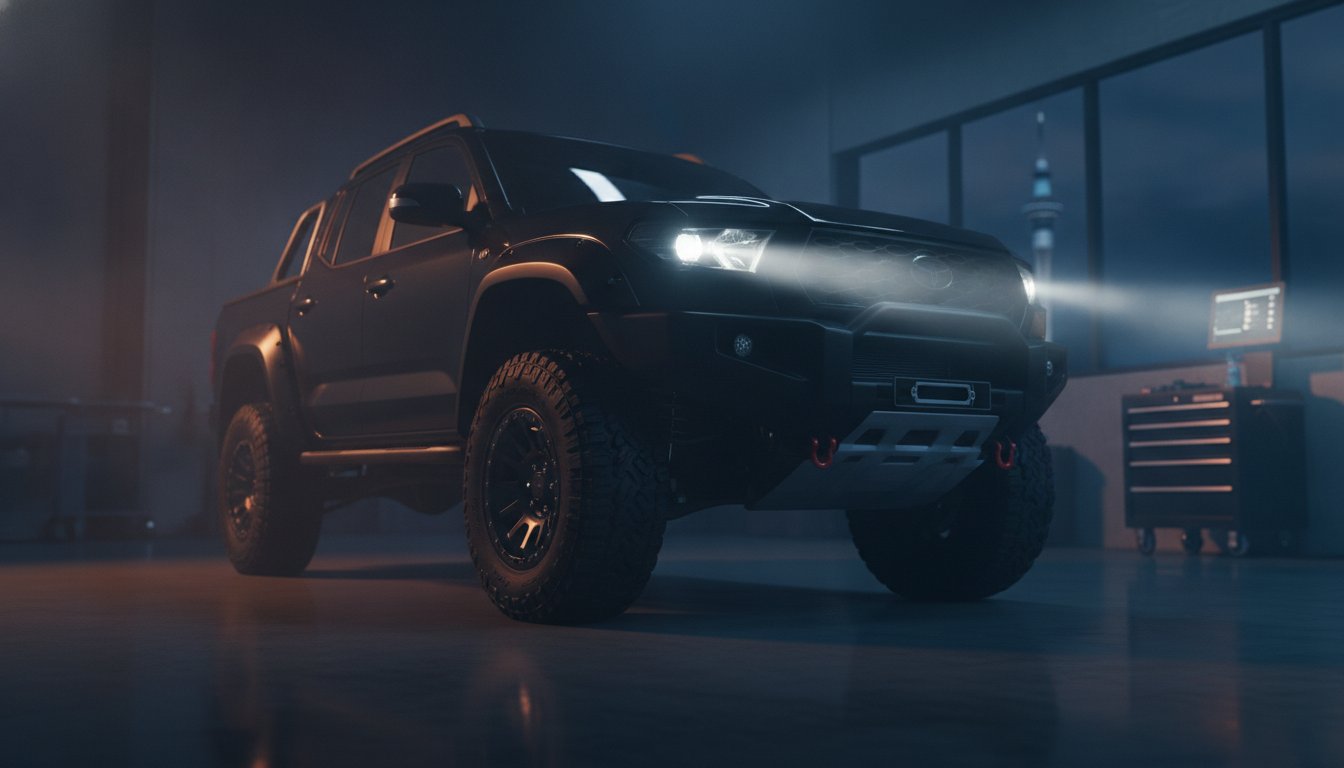
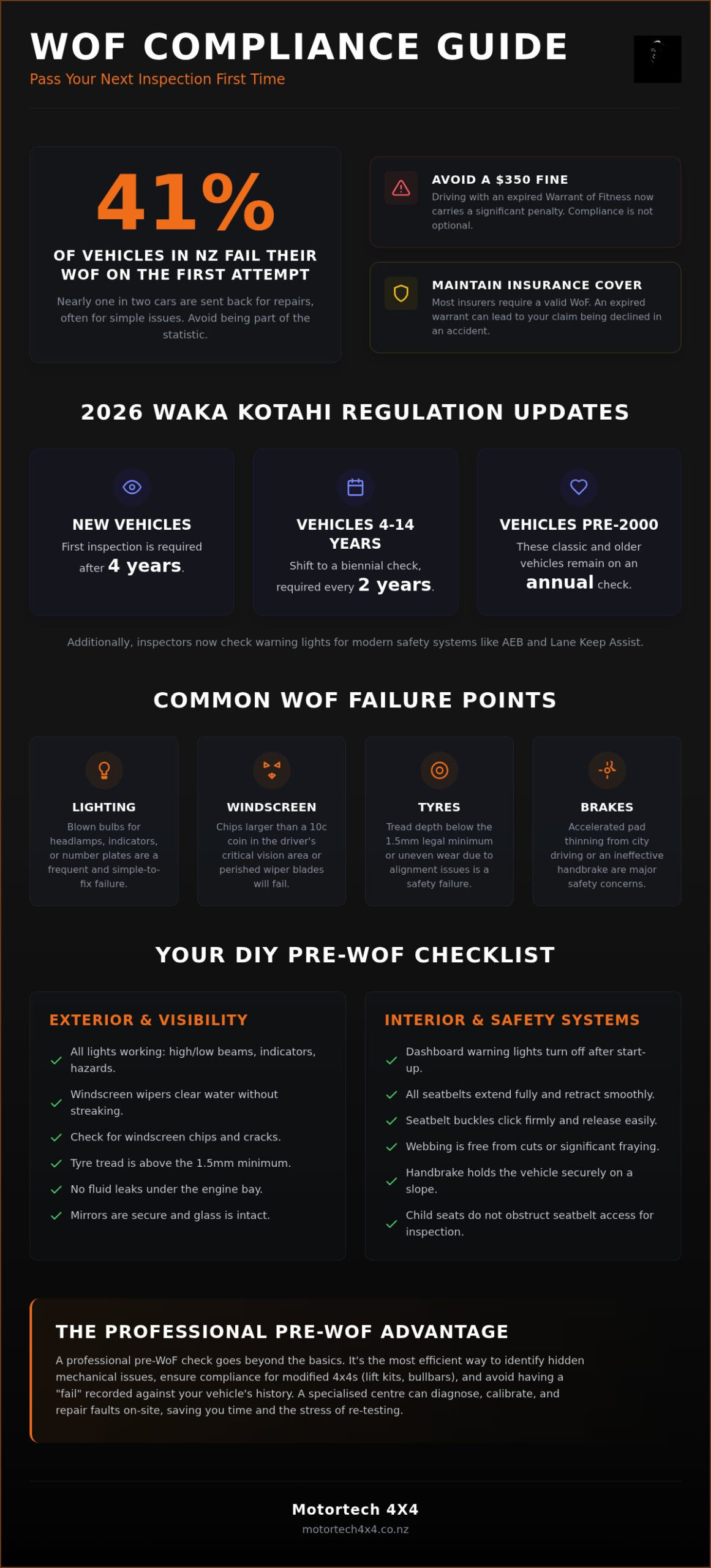
Did you know that 41% of vehicles in New Zealand fail their Warrant of Fitness on the first attempt? That is nearly one in every two cars sent back for repairs, often for simple issues that could have been spotted in minutes. For drivers seeking a pre wof check auckland, the goal is to avoid a wasted Saturday and the looming threat of a $350 fine if your sticker expires before a re-test. If you’re running a modified rig with a lift kit or bullbar, the stakes for compliance are even higher as regulations tighten throughout 2026.
We understand the frustration of unexpected repair bills and the confusion surrounding what is actually legal on the road today. You deserve to feel confident that your vehicle is safe and compliant without the stress of a surprise fail. This article outlines the critical 2026 WoF regulation changes, common failure points for 4x4s, and how a professional inspection ensures you’re 100% road legal. We will show you how to secure a first-time pass and keep your vehicle on the tracks where it belongs.
Key Takeaways
- Understand the 2026 Waka Kotahi updates, including the shift to biennial checks for newer vehicles and the new mandatory safety light inspections for modern safety systems.
- Learn how a simple exterior walk-around and windscreen inspection can prevent common failures before you arrive at the testing station.
- Identify the specific compliance requirements for modified 4x4s, ensuring your lift kits and bullbars meet current legal standards to avoid costly re-tests.
- Discover why a professional pre wof check auckland is the most efficient way to identify hidden mechanical issues and avoid the increased $350 fine for an expired warrant.
- Explore the benefits of using a specialised mechanical centre that can diagnose, calibrate, and repair faults on-site rather than just issuing a failure notice.
Understanding the Auckland Warrant of Fitness (WoF) Process
A Warrant of Fitness (WoF) is a mandatory safety inspection that verifies your vehicle meets the minimum roadworthiness standards required by New Zealand law. It is a point-in-time assessment. This means it only confirms your car is safe on the day of the test. Many drivers confuse this with a comprehensive mechanical service. While a service involves changing oils and filters to protect the engine’s health, a WoF focuses strictly on safety systems like brakes, tyres, and structural integrity. In 2026, inspectors now also monitor warning lights for modern safety tech, including Autonomous Emergency Braking (AEB) and Lane Keep Assist.
New Zealand’s inspection frequency has shifted significantly as of 1 November 2026. New vehicles now wait four years for their first inspection. Vehicles aged between 4 and 14 years move to a two-year cycle, while cars registered before January 2000 have transitioned to annual checks. Despite these longer intervals, Auckland’s punishing driving environment means components often fail before the next official test. Booking a professional pre wof check auckland ensures your vehicle remains compliant between these extended inspection windows. It allows you to identify issues early, preventing a “fail” result from being recorded against your vehicle’s history.
The Legal Requirements for Auckland Drivers
Waka Kotahi (NZTA) sets the safety standards every vehicle must meet to stay on the road. Compliance is not optional. If you are caught driving with an expired warrant after 1 November 2026, you face an immediate $350 fine. The legal consequences extend beyond your wallet. Most insurance providers require a valid WoF to maintain cover. If you’re involved in a collision with an expired warrant, your claim could be declined. Additionally, you cannot legally renew your vehicle’s licence (rego) without a current WoF. This makes a pre wof check auckland a vital step for any responsible owner.
Common Reasons for WoF Failure in the Big Smoke
Auckland’s road network presents specific challenges for vehicle maintenance. The prevalence of volcanic chip road surfaces in the region is particularly hard on rubber. This abrasive material can wear down tyre tread depth much faster than expected. Motorway congestion also forces frequent, heavy braking, leading to accelerated brake pad thinning. Professional operators, such as Drive NZ Rental Cars, understand these local conditions and prioritise regular maintenance to ensure their fleet remains roadworthy and safe for every journey. Other common failure points include:
- Lighting: Blown bulbs in indicators or number plate lights.
- Glazing: Chips or cracks in the windscreen caused by debris on the motorways.
- Tyres: Uneven wear or tread depth below the 1.5mm legal minimum.
The Essential DIY Pre-WoF Checklist for Kiwi Drivers
A basic inspection at home is the most effective way to avoid the “fail-repair-retest” loop. While a professional pre wof check auckland provides a deeper technical analysis, you can identify many common failure points in your own driveway. Start with the basics. Look for fluid leaks under the engine bay and check for excessive exhaust smoke. Dashboard warning lights are now a major focus in 2026, especially for modern safety systems like Lane Keep Assist. If any orange or red icons remain lit after start-up, your vehicle won’t pass. Following the official WoF requirements ensures you aren’t guessing about safety standards.
Interior safety is just as critical as the exterior. Pull every seatbelt out to its full length to check for fraying or cuts in the webbing. The buckles must click firmly and release without sticking. If you have child seats installed, ensure they don’t obstruct the inspector’s access to the belts, as they may need to be removed for the check. These small details often lead to avoidable delays during the official inspection process.
Visibility and Lighting Checks
Test your high and low beams, indicators, and hazards. Auckland’s humid climate often leads to perished wiper blades. They shouldn’t leave streaks or make a chattering noise when in use. Inspect your windscreen for chips. Any damage larger than a 10c coin in the “critical vision area” (the space directly in front of the driver) will result in a fail. Don’t forget your wing mirrors; the housings must be secure and the glass free of cracks. Ensure your number plate illumination is working, as a single blown bulb here is a frequent and frustrating reason for a failed warrant.
Tyres and Braking Performance
Auckland’s steep terrain puts immense pressure on your handbrake. Test it on a slope to ensure it holds the vehicle’s weight without needing to be pulled to the very top. For your tyres, the 20c coin trick remains the best DIY tool. Insert the coin into the tread; if the base of the “20” is visible, you’re likely below the 1.5mm legal limit. Look for uneven wear on the inner or outer edges, which often signals an alignment issue. If you’re concerned about your rig’s handling, a quick 4×4 servicing check can identify suspension wear that a standard visual inspection might miss. Check the sidewalls for any bulges or deep cuts that could indicate structural damage from road debris.
Compliance Minefields: WoF Checks for Modified 4x4s and Utes
Modified 4x4s and utes face significantly more scrutiny at Auckland testing stations compared to standard passenger cars. Inspectors are trained to look for modifications that could compromise structural integrity or pedestrian safety. If you’ve added a lift kit, bullbar, or larger tyres, your vehicle must still align with the NZ Transport Agency (NZTA) WoF guidelines. A dedicated pre wof check auckland is the best way to catch compliance issues before they lead to a failed inspection and a costly re-test.
Speedometer accuracy is a common failure point for rigs running oversized tyres. When you increase the rolling diameter of your wheels, the speedometer often under-reports your actual speed. By law, a speedometer must not show a speed less than the true speed. If your 33-inch or 35-inch tyres have thrown your calibration out, you’ll need to address this to stay road legal. Bullbars and winches also need careful inspection. They must be securely mounted and free of sharp protrusions that could increase the risk of injury to pedestrians. We ensure that any fitted accessories don’t interfere with airbag sensors or modern ADAS systems.
Suspension and Lift Kit Legality
Suspension height is one of the most misunderstood areas of 4×4 compliance. In New Zealand, most suspension lifts up to 50mm don’t require a Low Volume Vehicle (LVV) certification, provided the kit is designed for the specific vehicle and doesn’t interfere with other components. However, anything beyond this threshold usually triggers the need for a certificate. During a pre wof check auckland, we inspect aftermarket shock absorbers for leaks and ensure that coil springs are correctly seated. A spring that becomes unseated when the suspension is at full extension is an automatic fail. We also check for play in ball joints and bushes that may have been accelerated by the increased angles of a lift kit.
GVM Upgrades and Payload Compliance
Exceeding your vehicle’s Gross Vehicle Mass (GVM) is a serious safety risk and a guaranteed way to fail a WoF. This is especially relevant for commercial fleet vehicles and touring rigs loaded with canopies, bullbars, and winches. If your modifications have pushed your weight near or over the factory limit, a GVM upgrade is necessary to maintain legal road status. At Motortech 4X4, we specialise in professional fit-outs that maintain legal compliance. We ensure your heavy-duty accessories and suspension upgrades work together safely, keeping your rig compliant with the latest 2026 standards. This proactive approach saves you from the frustration of a failed test when your vehicle is fully loaded for a trip.
Pre-Check vs. Re-Test: Saving Time and Money in Auckland
Many drivers focus only on the initial inspection fee, but the real expense is often the hidden cost of the re-test cycle. A failed test at a high-volume station forces you into a 28-day repair window. This creates significant pressure for Auckland commuters who depend on their vehicles for daily transport. You shouldn’t have to scramble for last-minute repairs while your vehicle’s legal status hangs in the balance. By investing in a pre wof check auckland, you maintain complete control over the repair timeline.
Testing stations frequently charge a premium for minor “quick fix” repairs, such as bulb replacements or wiper blades, just to clear a re-test. While these services are convenient, the mark-up on parts and labour is often higher than at a specialised workshop. A professional pre-check allows you to identify these needs early. You can then choose high-quality components, like upgraded vehicle lighting or heavy-duty tyres, rather than accepting basic parts from a testing station’s limited stock. This ensures your vehicle isn’t just passing a test; it’s being genuinely improved for Auckland’s driving conditions.
The Value of a Specialist Eye
General testing stations are safety inspectors, not mechanical specialists. They often miss nuanced wear patterns that are specific to off-road vehicles and heavy utes. A specialist identifies hidden issues like torn CV boots, leaking shock absorbers, or worn suspension bushes before they trigger an official failure. This preventative approach is far more cost-effective than reactive repairs. Fixing a small leak or replacing a bush during a scheduled service prevents the component from failing completely and causing secondary damage to your drivetrain or steering systems.
Organising Your Fleet for Compliance
For businesses running trade utes or delivery vans, downtime equals lost revenue. Streamlining inspections through a professional mechanical centre minimises the time your vehicles spend off the road. We provide the comprehensive documentation and service history required for health and safety compliance and maintaining high resale values. Booking a fleet servicing package ensures your vehicles are always road legal and ready for the job. We handle the technical details of GVM upgrades and commercial fit-outs so your fleet stays compliant with the 2026 standards without interrupting your daily operations.
Professional Pre-WoF Inspections at Motortech 4X4
Motortech 4X4 serves as a definitive source of expertise for Auckland drivers who value precision and reliability. We don’t just identify faults; we provide the technical solutions required to resolve them. Our pre wof check auckland is a comprehensive assessment designed for both standard passenger vehicles and heavily modified 4×4 rigs. We understand the meticulous attention to detail required to keep a high-performance vehicle road legal under the 2026 standards.
Choosing a specialised workshop means you avoid the frustration of multiple appointments. Our service centre is equipped with advanced diagnostic tools and master technicians capable of handling complex mechanical repairs on-site. If your vehicle requires a transmission flush to improve performance or a complete suspension overhaul, we manage the entire process under one roof. This methodical approach ensures your vehicle meets safety standards without the guesswork associated with generic testing stations.
Specialist Equipment for Modern Vehicles
Modern safety systems require more than a simple visual check. Our facility features specialised ADAS Calibration equipment. This ensures your lane-keep assist and emergency braking sensors are perfectly aligned, which is essential after fitting Suspension Kits or Bullbars. We utilise ECU diagnostics to communicate with your vehicle’s electronic control units, identifying electronic faults before they trigger a dashboard warning light. This level of technical diligence has built our Auckland-wide reputation for excellence in 4×4 and fleet specialist services.
Book Your Auckland Pre-Check Today
Preparing for your appointment is straightforward. Ensure your vehicle is clean, particularly the underbody if you’ve recently been off-road, as inspectors require clear visibility of all structural components. Bring any existing LVV certificates if your vehicle has undergone significant modifications. Our Auckland workshop is conveniently located to serve the community with professional, results-oriented care. We focus on getting your vehicle through its inspection on the first attempt, saving you time and protecting your wallet from avoidable fines.
Book your Pre-WoF Check at Motortech 4X4
Secure Your Road Legal Status for 2026
Staying ahead of the 2026 Waka Kotahi regulation changes is essential for every Auckland driver. With the fine for an expired warrant increasing to $350 and new biennial inspection cycles for newer vehicles, maintaining constant roadworthiness is more critical than ever. While a basic DIY walk-around identifies simple bulb and tyre issues, the technical complexities of modern safety systems and heavy modifications require a professional eye. Booking a pre wof check auckland ensures your vehicle isn’t just a statistic in the 41% failure rate seen at testing stations.
As Auckland’s leading 4×4 and fleet specialists, we provide the precision required for expert ADAS calibration and specialist knowledge of GVM and suspension compliance. We don’t just find faults; we resolve them on-site to keep your vehicle moving. Don’t risk a failed test or an expensive fine on the motorway. Book your specialist Pre-WoF Check at Motortech 4X4 today and enjoy the confidence of a rig that’s 100% compliant and ready for any adventure. It’s the smartest way to protect your time and your vehicle’s performance.
Frequently Asked Questions
How long does a pre-WoF check take in Auckland?
A standard pre wof check auckland typically takes between 30 and 60 minutes to complete. This timeframe allows our technicians to perform a methodical inspection of all safety-critical components, including lighting, tyres, and braking systems. If your vehicle has extensive modifications like aftermarket suspension or custom fleet fit-outs, the process might take slightly longer to ensure every component meets current 2026 compliance standards. We recommend booking in advance to ensure a fast turnaround.
Will my 4×4 pass a WoF with a 2-inch lift kit?
Most 4×4 vehicles will pass with a 2-inch (50mm) lift kit provided the components are specifically designed for your make and model. The kit must be correctly installed and shouldn’t interfere with the vehicle’s braking or steering geometry. However, if the lift exceeds 50mm or uses adjustable shackles, you’ll likely require a Low Volume Vehicle (LVV) certification. Our team checks for spring seating and shock absorber leaks to ensure your suspension remains road legal.
What happens if my vehicle fails its Warrant of Fitness?
If your vehicle fails, the inspector will issue a failure notice outlining the necessary repairs. You have 28 days to rectify these issues and return for a re-inspection at the same station. During this period, you should only drive the vehicle to a workshop for repairs or back to the testing station. Driving for any other reason with a failed warrant can result in a $350 fine under the updated 2026 regulations.
Can I get my WoF repairs done at Motortech 4X4?
Yes, we are a full mechanical service centre capable of handling all necessary repairs on-site. Whether your vehicle failed on worn brake pads, perished bushes, or complex ADAS calibration issues, our master technicians can resolve the problem. We specialise in high-performance and modified vehicles, ensuring that any replacement parts meet or exceed factory safety standards. This one-stop approach saves you from the hassle of visiting multiple workshops to clear a failure notice.
Is a pre-WoF check different from a regular car service?
A pre wof check auckland focuses strictly on the safety and roadworthiness requirements set by Waka Kotahi. In contrast, a regular car service involves preventative maintenance like oil changes, filter replacements, and engine tuning to ensure long-term reliability. While a WoF check is a legal necessity to stay on the road, a service is an investment in your vehicle’s mechanical health. We often recommend combining both to ensure your rig is both safe and efficient. Just as you maintain your vehicle, don’t forget your personal health; if you’re in the Bay of Plenty, check out Dental Plus for professional dental services.
You generally don’t need an LVVTA certificate for a snorkel, provided it’s securely fitted and doesn’t obstruct the driver’s view. Bullbars also don’t typically require certification if they are manufacturer-approved and don’t feature sharp protrusions or interfere with airbag sensors. However, the installation must be professional and meet pedestrian safety standards. If your modifications are extensive or custom-fabricated, our specialists can advise whether you need to seek formal certification for your specific setup.
How often do I need a WoF for a 2026 model vehicle?
For a vehicle registered new in 2026, your first Warrant of Fitness inspection isn’t required until the car is four years old. This is a recent change from the previous three-year requirement. After that initial check, vehicles between four and 14 years old will move to a biennial (every two years) inspection cycle. It’s important to remember that even with fewer tests, you’re legally responsible for keeping the vehicle in a roadworthy condition at all times.
Can a cracked tail light cause a WoF failure?
A cracked tail light is a common reason for failure if it allows white light to shine through or if the damage has created sharp edges. Moisture ingress through a crack can also damage the internal electrical components or dull the reflector, which compromises safety. If the crack is minor and hasn’t affected the colour of the light or the structural integrity of the housing, it might pass, but it’s always safer to have it inspected first.