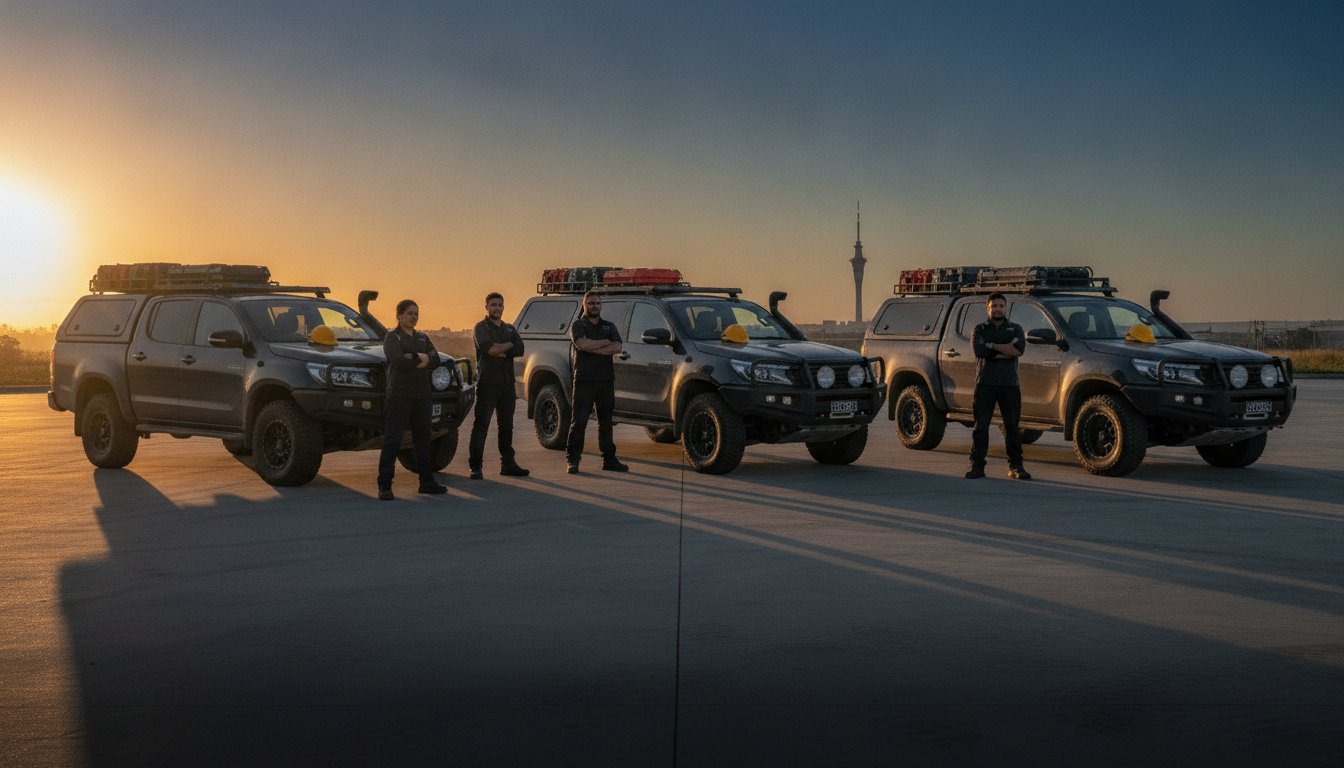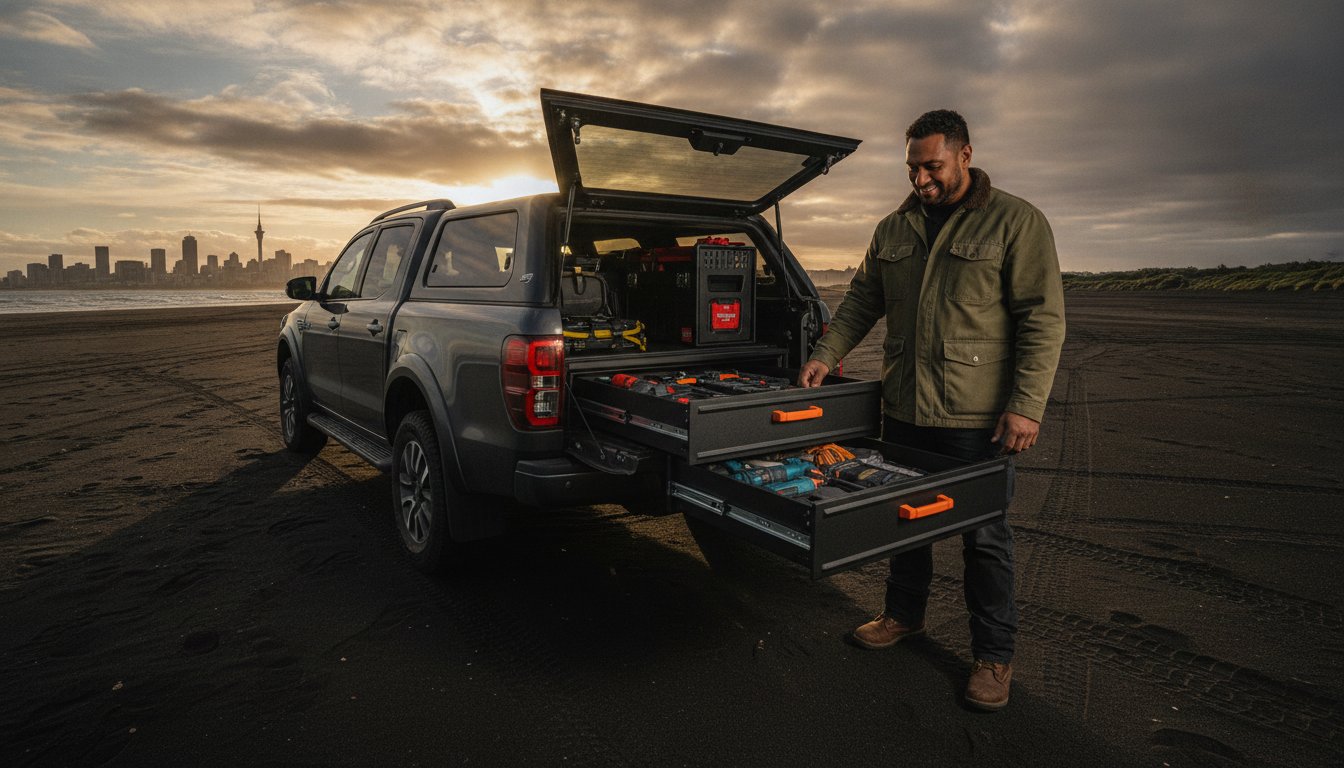
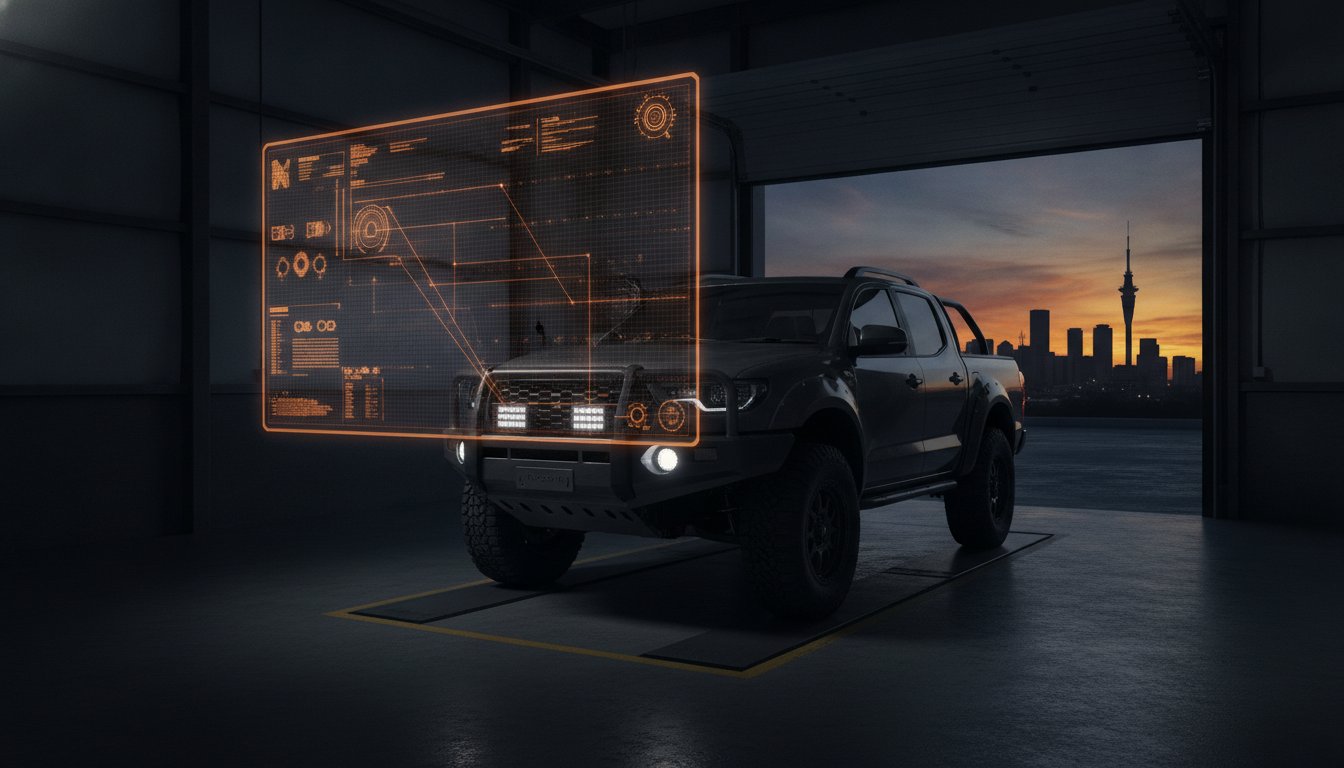
You’ve just finished fitting a high-end suspension lift and a steel bullbar to your rig, but on the drive home through Auckland, your lane-keep assist starts tugging at the wheel and an unfamiliar warning light flickers on the dash. It is a common scenario for local 4×4 enthusiasts who don’t realise that even a minor change in ride height completely alters the sensor frame of reference for their vehicle’s safety tech. For anyone seeking expert ADAS calibration Auckland wide, understanding the link between mechanical upgrades and electronic precision is now essential for both safety and legality.
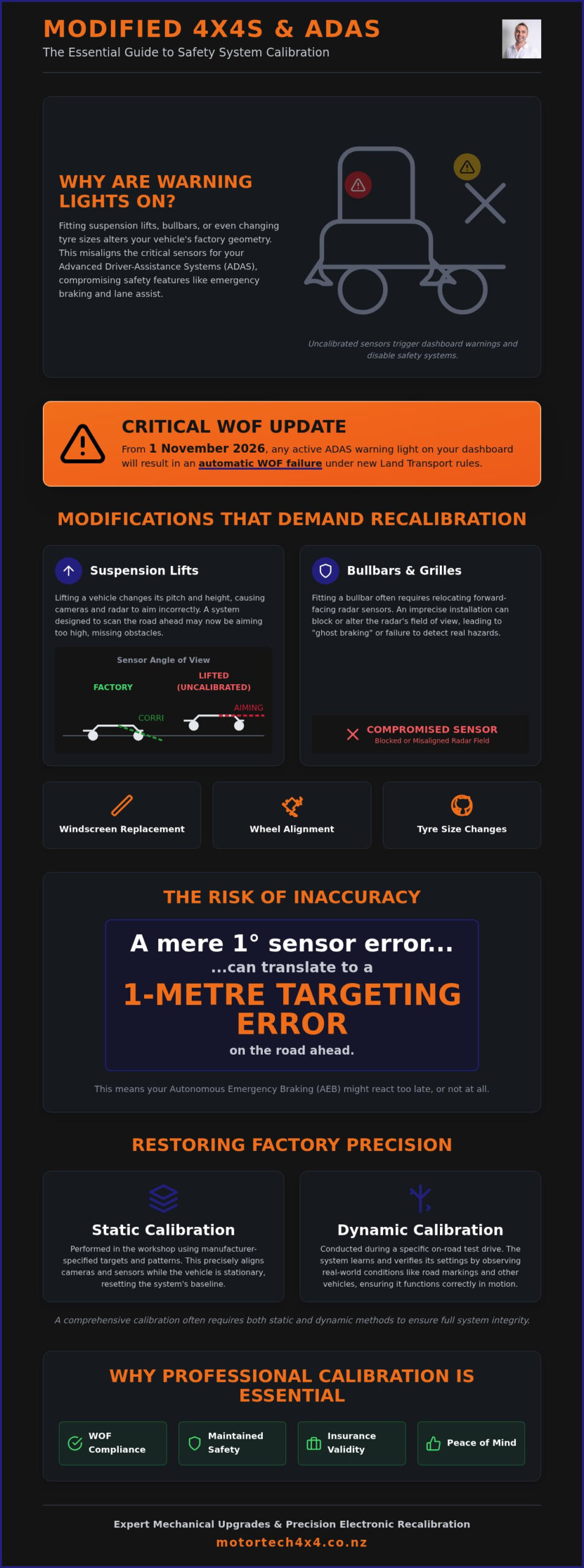
We understand that you want your vehicle to perform off-road without sacrificing the smart safety features that protect your family on the motorway. From November 1, 2026, any active ADAS warning light will result in an automatic WOF failure under new Land Transport rules, making professional recalibration more critical than ever. This article explores why modifications necessitate a tech reset, how the calibration process works, and what you need to do to ensure your emergency braking and blind-spot monitoring remain fully compliant and reliable.
Key Takeaways
- Understand why common 4×4 modifications like suspension lift kits and bullbars alter sensor geometry and necessitate expert ADAS calibration Auckland services.
- Learn about the critical WOF regulation changes taking effect on November 1, 2026, where dashboard warning lights will result in an automatic inspection failure.
- Discover the difference between static and dynamic calibration methods and why both may be required to restore your vehicle’s factory safety standards.
- Ensure your insurance remains valid and your fleet meets its duty of care by verifying that emergency braking systems function accurately after any structural changes.
- Recognise the advantage of a one-stop workshop that handles both the mechanical installation of accessories and the precision electronic recalibration in one visit.
What is ADAS Calibration and Why Does Auckland Need It?
Modern vehicles are no longer just mechanical machines; they are sophisticated mobile computers. Advanced Driver-Assistance Systems (ADAS) rely on a complex network of cameras, radar sensors, and ultrasonic devices to monitor the environment around the vehicle. Calibration is the technical process of ‘re-teaching’ these sensors their correct physical position relative to the road surface. When you alter a vehicle’s geometry, the sensors’ “eyes” are effectively knocked out of focus. Professional ADAS calibration Auckland services restore this precision, ensuring your vehicle’s safety software correctly interprets the world around it.
Auckland drivers navigate a demanding mix of environments. You might be climbing the steep, winding tracks of the Waitakere Ranges in the morning and sitting in high-density, stop-start traffic on the Southern Motorway by the afternoon. In these settings, a split-second delay in Autonomous Emergency Braking (AEB) or a miscalculation by Lane Keep Assist can lead to disaster. Precision calibration ensures you stay on the safe side of driving by providing a digital safety net that functions exactly as the manufacturer intended, regardless of the terrain.
Common ADAS Features in Modern Aussie and Kiwi Utes
- Autonomous Emergency Braking (AEB) and Forward Collision Warning: These systems scan for pedestrians or stationary vehicles to prevent collisions in Auckland’s heavy traffic.
- Lane Departure Warning and Lane Keep Assist: Digital cameras track road markings to keep you centred, which is vital for narrow rural roads or long motorway stretches.
- Adaptive Cruise Control: This maintains a safe following distance automatically. It’s an essential feature for reducing driver fatigue during the daily crawl on State Highway 1.
When Does Your Vehicle Require Recalibration?
Calibration isn’t a one-time setup. It’s a requirement whenever the sensor’s mounting point or the vehicle’s orientation to the road changes. Traditional maintenance and repairs often trigger this need. If you’ve had a windscreen replaced, the forward-facing camera mounted behind the glass must be realigned. Even a standard wheel alignment or a change in tyre size alters the chassis pitch, which can throw sensor data out of spec. Most importantly for Auckland’s off-road community, fitting a suspension lift kit or a bullbar significantly shifts the sensor’s height and angle. Without a professional ADAS calibration Auckland, these modifications can cause safety systems to engage at the wrong time or fail to activate during an emergency.
The 4×4 Connection: Why Lift Kits and Bullbars Demand ADAS Recalibration
When you install a 2-inch lift kit, you aren’t just gaining ground clearance. You’re fundamentally altering the vehicle’s “angle of attack” relative to the horizon. A camera designed to scan the road at a factory height of 800mm is suddenly looking over the top of obstacles it needs to detect. This geometric shift is why ADAS calibration Auckland is a non-negotiable step in any professional 4×4 build. Without it, the electronic brain of your ute is operating on outdated physical data, leading to delayed responses or complete system failure.
Suspension Lifts and Sensor Misalignment
Most modern utes feature a factory rake where the rear sits slightly higher than the front. Levelling kits or heavy-duty suspension upgrades change this pitch. According to NZTA research on modified vehicles, even minor height changes can compromise safety system performance. A mere 1-degree error at the sensor level can translate to a 1-metre error on the road ahead. This misalignment means your Autonomous Emergency Braking (AEB) might target the asphalt instead of the vehicle in front. When undertaking GVM upgrades, the increased static height and changed suspension travel further complicate sensor logic, requiring expert recalibration to maintain factory safety thresholds.
Bullbars and Radar Relocation
Fitting a bullbar often requires relocating front-facing radar sensors from the original grille to a new housing within the bar. If the mounting isn’t millimetre-perfect, the radar’s field of vision is compromised. High-quality aftermarket bars are designed for radar transparency, but poor installation can lead to “ghost braking” where the system detects the bullbar’s own structure as an obstacle and abruptly engages the brakes. DIY accessory fitting poses a significant risk here. While it’s possible to bolt a bar on in a home garage, it’s impossible to verify the sensor’s electronic alignment without specialised ADAS calibration Auckland equipment.
At Motortech 4X4, we understand the mechanical nuances of how these upgrades impact your rig’s electronic brain. We don’t just fit the hardware; we ensure the software is synced to the new geometry. If you are planning a build, it’s worth considering a professional 4×4 modification package that includes full system testing. This comprehensive approach ensures your rig remains safe, predictable, and compliant with New Zealand road standards, giving you peace of mind whether you’re on the job site or the trail.
Static vs Dynamic Calibration: The Motortech 4X4 Difference
Effective ADAS calibration Auckland wide requires two distinct approaches depending on the vehicle manufacturer’s specifications. Static calibration occurs in a highly controlled workshop environment. We use specialised targets, boards, and laser alignment tools to set the baseline for cameras and radar sensors while the vehicle is stationary. Conversely, dynamic calibration involves a diagnostic tool connected to the vehicle while it is driven in a specific pattern on the road. This allows the system to “learn” its environment in real-time. While some vehicles only require one method, many modern rigs demand both to guarantee 100% safety performance.
A critical detail often overlooked by generalist workshops is the workshop floor itself. For static calibration to be accurate, the vehicle must be perfectly level. Even a minor slope in the concrete can throw off the sensor’s vertical pitch, leading to incorrect obstacle detection. Advanced safety tech is designed to save lives, but complex modifications like lift kits can complicate repairs and recalibration efforts. We ensure our facility meets the stringent requirements for level-surface calibration, providing a precision environment that most standard garages simply cannot replicate.
Our Auckland Workshop Setup
Precision is the cornerstone of our service. Our facility is equipped with advanced electronic diagnostic tools that meet Original Equipment Manufacturer (OEM) standards. When dealing with long-range radar, we focus on accuracy to within millimetres. This level of detail is vital because a sensor offset by a fraction of a millimetre at the mounting point can result in a significant deviation at a distance of 100 metres. This meticulous technical work is a core component of our Specialized 4×4 Servicing, ensuring every structural modification is matched with digital accuracy.
The Recalibration Process Step-by-Step
A successful calibration follows a methodical sequence to eliminate variables that could skew the results:
- Pre-calibration check: We verify tyre pressures and confirm the wheel alignment is within spec, as these factors directly influence the vehicle’s rake and sensor orientation.
- Digital sensor alignment: Using manufacturer-specific software, we communicate with the vehicle’s ECU to reset the sensors to their new “zero” point relative to the modified ride height.
- Final verification: Every ADAS calibration Auckland project concludes with a verification drive. This ensures the dashboard is clear of faults and all systems, from AEB to adaptive cruise control, are fully operational in real-world conditions.
WOF Compliance and Insurance: Staying Legal on Auckland Roads
Advanced safety technology has shifted from being a driver convenience to a core component of vehicle compliance. In Auckland, where modified utes are a staple on both worksites and motorways, failing to maintain these systems carries heavy legal and financial weight. Professional ADAS calibration Auckland ensures that your vehicle isn’t just physically capable, but legally sound and fully protected by your insurance policy.
For fleet managers, the stakes are even higher. There is a clear “Duty of Care” to ensure that staff are operating vehicles that meet every safety standard. If a company ute is involved in an accident and the safety systems are found to be non-operational due to modifications, the business faces significant liability risks. A professional calibration certificate provides the necessary documentation to prove that the vehicle’s electronic safety nets are functioning exactly as the manufacturer intended.
WOF Requirements for ADAS
The regulatory environment in New Zealand is tightening. Under the Land Transport Rule: Vehicle Standards Compliance Amendment 2026, any vehicle with an active ADAS-related warning light on the dashboard will automatically fail its Warrant of Fitness (WoF) or Certificate of Fitness (CoF) inspection from November 1, 2026. This change reflects the transition of ADAS from an optional extra to a mandatory safety system. It is vital to understand that “clearing the code” with a basic scan tool is not a substitute for calibration. If the underlying sensor misalignment caused by a suspension lift remains, the system will continue to provide inaccurate data, potentially leading to a dangerous failure during an emergency. You can review our WOF Pre-Inspection Checklist to see how electronic health checks are now a standard part of the inspection process.
Insurance and Liability for Modified Vehicles
Insurance providers are increasingly focused on the intersection of performance upgrades and safety tech. When you modify a vehicle’s ride height or rake angle, you must disclose these changes to your insurer. Crucially, you may also need to provide proof that the ADAS has been recalibrated to suit the new geometry. If an uncalibrated vehicle is involved in a collision and the AEB system fails to engage, insurers have grounds to deny the claim, citing the vehicle as unroadworthy or modified beyond safe operating limits. Protecting your asset requires more than just high-quality hardware; it requires professional documentation that your safety systems are synced to your new modifications.
Don’t risk a WOF failure or a voided insurance claim. Contact the experts at Motortech 4X4 to book your ADAS calibration and ensure your modified rig stays fully compliant on New Zealand roads.
Why Choose Motortech 4X4 for Your ADAS Calibration in Auckland?
Selecting a provider for ADAS calibration Auckland wide requires a partner who understands the mechanical soul of a vehicle, not just the software behind the dashboard. At Motortech 4X4, we bridge the gap between rugged off-road performance and high-precision electronic safety. We operate as a comprehensive mechanical centre where the technicians installing your heavy-duty suspension are the same experts ensuring your radar and camera systems are perfectly aligned. This “whole vehicle” perspective is vital for modified rigs where every millimetre of lift or change in rake impacts the digital safety net your family relies on.
Our Auckland facility is designed to be a one-stop shop for the modern driver. Whether you are a weekend adventurer or a fleet manager overseeing a dozen company utes, we provide a seamless service path. We can fit your bullbar, install a GVM upgrade, and perform a full ADAS recalibration in a single visit. This integrated approach eliminates the need to coordinate between multiple workshops, reducing vehicle downtime and ensuring that every modification is verified for safety before the keys are handed back to you.
Expertise Beyond the Windscreen
While many windscreen replacement centres offer basic calibration services, they often struggle with vehicles that have deviated from factory suspension geometry. A standard technician might follow a software prompt, but a specialist mechanic understands how a loaded canopy or an aftermarket lift kit physically alters the vehicle’s “zero point.” We bring years of experience with leading platforms like the Toyota Hilux, Ford Ranger, and Mitsubishi Triton, ensuring that your specific model’s safety logic is respected. Having a seasoned professional who understands both the hardware and the software means your rig is treated with the meticulous attention to detail it deserves.
Book Your Calibration Today
We recognise that for Auckland tradies and businesses, a vehicle off the road is a vehicle not making money. Our booking process is designed for efficiency, offering fast turnaround times to get you back on the tools without compromising on safety or compliance. We provide full documentation for your records, which is essential for insurance verification and fleet safety audits. Our commitment is to keep Kiwi families and workers safe by ensuring that every emergency braking and lane-keep system we touch is accurate, reliable, and road-legal.
Ready to ensure your vehicle is performing at its peak? Book your ADAS Calibration at Motortech 4X4 now and experience the peace of mind that comes with professional, 4×4-specialist service.
Ensure Your Rig is Road-Ready and Safety-Compliant
Maintaining the safety of a modified vehicle requires more than just mechanical skill; it demands digital precision. Any change to your ride height or front-end structure fundamentally shifts how your safety sensors perceive the road. With stricter WOF regulations on the horizon, ensuring your dashboard is clear of faults and your sensors are accurately aligned is essential for both legal compliance and driver safety.
Choosing a specialist for your ADAS calibration Auckland needs ensures that your emergency braking and lane-keep systems are synced perfectly with your lift kit or bullbar. As expert 4×4 modification specialists, Motortech 4X4 utilises advanced OEM-grade calibration equipment to provide comprehensive fleet and commercial support. We don’t just bolt on accessories; we integrate them into your vehicle’s electronic ecosystem to keep you protected on and off the road.
Don’t leave your vehicle’s safety tech to chance or generalist workshops that lack specialised 4×4 knowledge. Secure your safety—Book your ADAS Calibration at Motortech 4X4 Auckland today. We look forward to helping you get the most out of your rig while keeping you and your passengers safe on every journey.
Frequently Asked Questions
How much does ADAS calibration cost in Auckland?
The cost varies depending on whether your vehicle requires static calibration, dynamic calibration, or a combination of both methods. Factors such as the complexity of your safety systems and the nature of your modifications also influence the final investment. While industry rates fluctuate, it is best to request a specific quote based on your vehicle’s make and model. This ensures you receive an accurate price that covers the professional labour and specialised equipment required for the task.
Will my lift kit definitely affect my ADAS sensors?
Yes, any suspension modification that alters the ride height or rake of your vehicle will impact the sensors’ field of vision. Most modern safety systems are calibrated to factory height specifications. When you install a lift kit, the camera and radar sensors are no longer aligned with the road surface as intended. This geometric shift can cause systems like autonomous emergency braking to malfunction, making professional recalibration a mandatory step for any lifted 4×4 rig.
Can I drive my vehicle if the ADAS warning light is on?
While the vehicle may remain physically drivable, an active ADAS warning light indicates that your safety systems are compromised or non-operational. Driving with these faults increases your risk of collision, as features like forward collision warning may not trigger correctly. Additionally, upcoming regulatory changes in New Zealand mean an active warning light will soon result in an automatic WOF failure. It is vital to have the system diagnosed and calibrated to restore full safety functionality as soon as possible.
How long does a professional ADAS calibration take?
A standard ADAS calibration Auckland service typically takes between one and three hours to complete. This timeframe allows for the initial pre-calibration checks, such as verifying tyre pressures and wheel alignment, followed by the electronic reset and a final verification drive. Complex builds with significant structural modifications might require more extensive workshop time to ensure every sensor is millimetre-perfect. We recommend booking in advance to ensure a fast turnaround for your personal or fleet vehicle.
Does every workshop in Auckland offer ADAS calibration?
No, many generalist workshops lack the specialised diagnostic software and controlled workshop environments required for this precision work. Effective calibration requires OEM-grade tools and a perfectly level floor, which many standard garages don’t possess. At Motortech 4X4, we specialise in the intersection of mechanical modifications and electronic systems. This expertise is particularly important for 4×4 owners who need a technician capable of understanding how structural changes affect advanced safety software.
Do I need to recalibrate my ADAS after getting new tyres?
Recalibration is necessary if you change to a different tyre size that significantly alters the vehicle’s height or rolling circumference. Even a minor increase in tyre diameter changes the angle at which your cameras and radar interact with the road. If you are replacing tyres with the exact same size and specifications, a full recalibration is usually not required. However, any change that impacts the chassis pitch or height should be followed by a professional system check.
What happens if I don’t calibrate my sensors after a bullbar install?
Failing to recalibrate after fitting a bullbar can lead to dangerous “ghost braking” or the total failure of crash avoidance features. If the radar sensor is shifted even slightly during the installation, it may detect the road surface or the bullbar itself as an imminent obstacle. This can cause the vehicle to apply the brakes unexpectedly at motorway speeds. Professional ADAS calibration Auckland ensures the relocated sensors are correctly aligned to see the path ahead clearly and accurately.
Is ADAS calibration covered by my insurance after a windscreen claim?
Most comprehensive insurance policies in New Zealand cover the cost of ADAS recalibration as part of a windscreen replacement claim. Because the forward-facing camera is often mounted directly to the glass, calibration is a required safety step to return the vehicle to its pre-accident condition. You should always confirm with your insurer that the calibration is included in the repair authorisation. This ensures your safety systems remain fully operational without incurring unexpected out-of-pocket expenses for the technical reset.