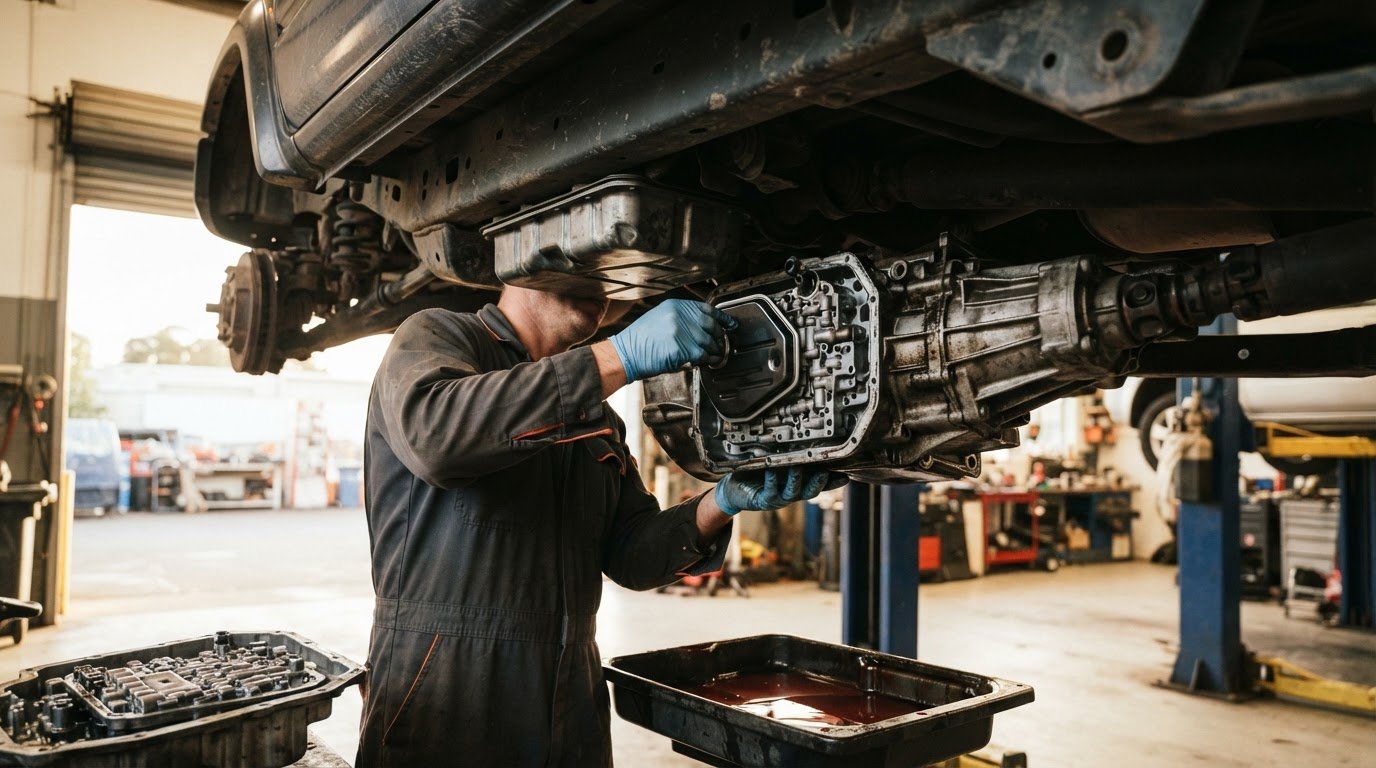
A transmission service is more than a fluid change. To understand what a transmission service includes, start with the transmission type: the technician drains or evacuates the old fluid and refills it with the manufacturer-recommended type to the correct level. A more comprehensive service may include removing and examining the sump or pan where possible, cleaning or replacing the filter or screen, cleaning the pan and fitting a new pan gasket. The exact work depends on the vehicle and transmission design.
A transmission service should include an inspection, not just fresh fluid. Transmission fluid helps lubricate and cool internal components, so its condition and the surrounding parts matter. This guide explains common service procedures, what technicians inspect and replace, and which symptoms may need closer attention. You’ll also learn why the manufacturer’s recommended fluid and service interval matter, and how slipping, difficult gear changes or grinding sounds can signal a need for inspection.
Key Takeaways
- Understand how a filter replacement differs from a fluid exchange, and why the service may involve more than fresh fluid.
- Recognise grinding sounds, difficult gear changes and slipping as signs that warrant a closer inspection.
- See how diagnostic checks can help distinguish a service need from a transmission fault.
- Learn what technicians consider for automatic and manual transmissions, including the vehicle manufacturer’s fluid recommendations.
What’s Involved in a Transmission Service?
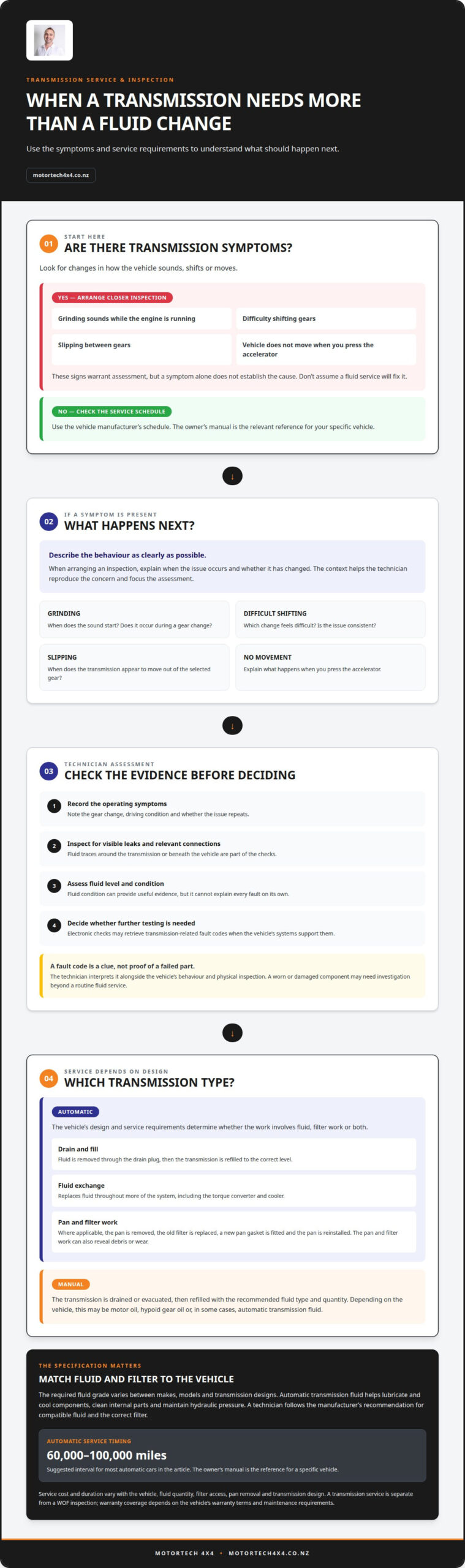
An automatic transmission service may involve a fluid change, filter work or both. The correct procedure depends on the transmission design and service requirements.
Automatic transmission fluid and filter work
Replacing the filter involves removing the transmission pan, taking out the old filter, fitting a new pan gasket and reinstalling the pan. The technician then refills the transmission to the correct level. A drain and fill removes fluid through the drain plug before refilling, while an exchange replaces fluid throughout more of the system, including the torque converter and cooler. Pan and filter work can also reveal debris or wear.
Service timing and transmission types
Automatic transmission service timing is guided by the vehicle manufacturer’s schedule. A suggested interval for most automatic cars is 60,000-100,000 miles, but the owner’s manual is the relevant reference for a specific vehicle. Automatic and manual services differ: manuals are drained or evacuated, then refilled with the recommended fluid type and quantity. Manuals may use motor oil, hypoid gear oil or, in some cases, automatic transmission fluid.
Vehicle-specific fluids and filters
Fluid and filter selection must match the vehicle and transmission specifications. Automatic transmission fluid helps lubricate and cool components, clean internal parts and maintain hydraulic pressure. The required grade varies between makes, models and transmission designs. A technician follows the manufacturer’s recommendation to select compatible fluid and the correct filter, rather than assuming one product suits every vehicle. Incorrect fluid or fitment can make the service unsuitable.
Service costs and timing
In Auckland, the cost of a transmission service depends on the vehicle, fluid quantity, filter access and whether the pan needs to be removed. Service duration also varies with the transmission design and work required, so there is no single timeframe for every car. Ask when your vehicle will be ready before driving it. A transmission service is separate from a WOF inspection; warranty coverage depends on the vehicle’s warranty terms and maintenance requirements. On an older transmission, using an unsuitable flush method or fluid can be a concern, so the procedure should suit its condition and specifications.
Symptoms that may require an inspection
Grinding sounds while the engine is running, difficulty shifting gears, slipping between gears, or a vehicle that does not move when you press the accelerator all warrant a transmission inspection. These signs indicate a need for assessment, but they don’t establish the cause. A technician needs to consider how the vehicle behaves and inspect it before identifying the fault.
Describe the symptom clearly when arranging an inspection. Note whether it happens during a particular gear change, after the vehicle has been travelling, or when accelerating from a stop. This context helps the technician reproduce the concern and focus the assessment. If the vehicle stops moving when you press the accelerator, explain exactly what happened rather than relying on a general description such as “it feels wrong”.
- Grinding while the engine runs: Report when the sound starts and whether it occurs during a gear change.
- Difficulty shifting: Describe which change feels difficult and whether the issue is consistent.
- Slipping between gears: Explain when the transmission appears to move out of the selected gear.
- No movement under acceleration: State whether the vehicle remains stationary despite pressing the accelerator.
Don’t assume a fluid service will fix these symptoms. Grinding, slipping or difficult shifts call for closer inspection, because the symptom alone cannot show whether the issue relates to fluid, a component or another transmission problem. A technician can assess the reported behaviour and determine what further work is appropriate.
For a useful assessment, share when the symptoms occur and whether they have changed. A vehicle that behaves differently during gear changes needs a different diagnostic focus from one that won’t move under acceleration. A professional assessment can help establish the next step based on the vehicle’s reported symptoms and inspection findings.
Transmission diagnostics and inspection
Diagnosis starts with the reported concern, not a parts list. A technician records when the fault occurs, then assesses the transmission in that context. For example, a delayed shift during acceleration provides different diagnostic information from a vehicle that won’t move. The aim is to identify the cause before deciding whether servicing or further repair is appropriate.
An inspection combines the driver’s description with checks of the vehicle. The technician looks for visible leaks, assesses the transmission fluid and checks relevant connections. Fluid condition can provide useful evidence, but it cannot explain every fault on its own. A worn or damaged component may need further investigation beyond a routine fluid service.
- Operating symptoms: Note the gear change, driving condition and whether the issue repeats.
- Leaks: Identify fluid traces around the transmission or beneath the vehicle.
- Fluid assessment: Consider its level and condition alongside the reported behaviour.
- Further testing: Decide whether additional checks are needed to isolate the cause.
Electronic diagnostics can provide additional information when the vehicle’s systems support them. A technician may retrieve transmission-related fault codes and compare them with the symptoms. A code points to an area for investigation; on its own, it doesn’t prove that a particular part has failed. Physical inspection and the vehicle’s behaviour help interpret the results.
The findings guide the next step. If the assessment points to scheduled maintenance, the technician can determine the service procedure from the transmission design and manufacturer’s requirements. If the evidence suggests a fault, a fluid change alone may not resolve it. Servicing addresses maintenance needs, while diagnosis investigates a specific operating problem.
Clear symptom details help focus the assessment. Describe whether the transmission slips between gears, shifts with difficulty, grinds while the engine runs or fails to move the vehicle under acceleration. These examples help the technician connect your concern with the inspection findings, then explain whether routine servicing or further diagnostic work is appropriate.
What a transmission service includes
A complete service combines checks and fluid work suited to the transmission. Knowing what a transmission service includes means looking beyond a fluid change: the technician follows the vehicle’s requirements and examines accessible components where the procedure allows. The exact scope depends on the transmission design.
For an automatic transmission, a thorough service may involve removing the sump or pan for examination. The technician cleans the pan, cleans or replaces the filter or screen, and fits a new pan gasket before refitting it. The transmission is then filled to the correct level. Examining the pan can reveal debris that may inform the next step.
- Fluid: Drain or exchange the old fluid, then refill with the recommended type.
- Filter or screen: Clean or replace it as the transmission design requires.
- Pan and gasket: Remove and inspect the pan where possible, clean it, and install a new gasket.
- Final level: Refill and set the fluid level correctly for the vehicle.
These tasks aren’t interchangeable for every service. A drain and fill removes fluid through the transmission’s drain plug, then refills it. A fluid exchange replaces fluid throughout more of the system, including the torque converter and cooler. Filter replacement involves removing the pan and working on the filter. The appropriate procedure depends on the vehicle and work required.
Manual transmission servicing follows a different fluid procedure. The technician drains or evacuates the old fluid, then refills the transmission with the manufacturer-recommended type and quantity. Manual transmissions may use motor oil, hypoid gear oil or, in some cases, automatic transmission fluid. The correct specification matters more than choosing fluid based on transmission type alone.
A service maintains the transmission; it doesn’t automatically diagnose or repair every fault. If symptoms such as difficult shifting or slipping prompted the booking, those concerns need assessment alongside maintenance. Arrange a transmission flush when fluid exchange is the appropriate service for your vehicle.
Motortech 4X4: Transmission flush
Motortech 4X4 provides transmission flush servicing for vehicles requiring transmission-fluid maintenance. A flush replaces old fluid with fresh fluid suited to the vehicle’s specification, supporting the lubrication and cooling functions described earlier. The correct approach depends on the transmission design and manufacturer’s service requirements.
A flush is a maintenance option, not a repair for every transmission concern. If your vehicle slips between gears, grinds while the engine runs or struggles to shift, these symptoms call for an inspection to identify the cause. Sharing the vehicle’s make, model and transmission symptoms helps clarify the work required.
For routine fluid maintenance, or when you’re weighing a flush against other service work, contact Motortech 4X4 to discuss your vehicle’s transmission needs.
Plan the right next step for your vehicle
Knowing what a transmission service includes helps you discuss your vehicle’s needs more clearly. The next decision is whether you’re arranging routine fluid maintenance or responding to a change in how the transmission behaves. These situations can call for different work, so describe the vehicle’s symptoms and service history when discussing the next step.
A transmission flush is relevant when fluid exchange suits the transmission and its maintenance requirements. If the vehicle has a fault, an inspection can help establish whether maintenance alone is appropriate. Motortech 4X4 also offers suspension kits, bullbars and snorkels for other vehicle projects, alongside its transmission service.
Share your vehicle details and the concern you’ve noticed, then discuss the suitable service. Contact Motortech 4X4 to talk through the next step for your transmission.
Frequently Asked Questions
What is transmission fluid?
Transmission fluid lubricates the inside of an automatic transmission and supports its operation. It helps cool internal components, clean parts and maintain hydraulic pressure. The required fluid depends on the transmission design, so the vehicle manufacturer’s specification matters. Manual transmissions may use motor oil, hypoid gear oil or, in some cases, automatic transmission fluid. Not every transmission uses the same fluid.
What does a standard transmission service include in New Zealand?
A standard service varies with the vehicle and transmission, so what a transmission service includes is not the same for every car. An automatic service may involve fluid work, while a more comprehensive procedure may include cleaning or replacing the filter or screen and inspecting the pan. A manual service involves replacing its fluid. The vehicle’s service schedule and transmission design determine the relevant maintenance requirements.
Does a transmission service include a fluid change or a flush?
A transmission service can involve a fluid change or an exchange, but these procedures aren’t automatically the same. A drain and fill removes fluid through the transmission drain plug before refilling. An exchange replaces fluid throughout more of the system. A flush is a service option, but the procedure should suit the vehicle’s transmission and requirements. Ask which method the service plan specifies and what work it covers.
How often should transmission fluid and filters be serviced in NZ?
Follow the transmission service interval in the vehicle owner’s manual, because schedules vary. The manual is also the right reference for checking whether filter replacement is scheduled alongside fluid maintenance. A vehicle used under demanding conditions may have different maintenance needs from one used for ordinary commuting. Follow the manufacturer’s guidance rather than applying one interval to every vehicle.
What checks and inspections are done during a transmission service?
Checks depend on the procedure and vehicle, but a technician may assess fluid level and condition, look for visible leaks and examine the pan when accessible. If the pan is removed, its condition and any debris can inform the assessment. Where relevant, electronic diagnostics can help investigate a reported fault. A fault code guides further checks; on its own, it doesn’t prove that a specific component has failed.
What are the signs that a vehicle needs a transmission service?
Grinding while the engine runs, difficult gear changes, slipping between gears or no movement when accelerating are signs that warrant an inspection. They don’t identify the cause by themselves, and a fluid service may not resolve an underlying fault. Note when the behaviour occurs, such as during a particular shift or when pulling away. This detail helps the technician relate your description to the vehicle’s operation.