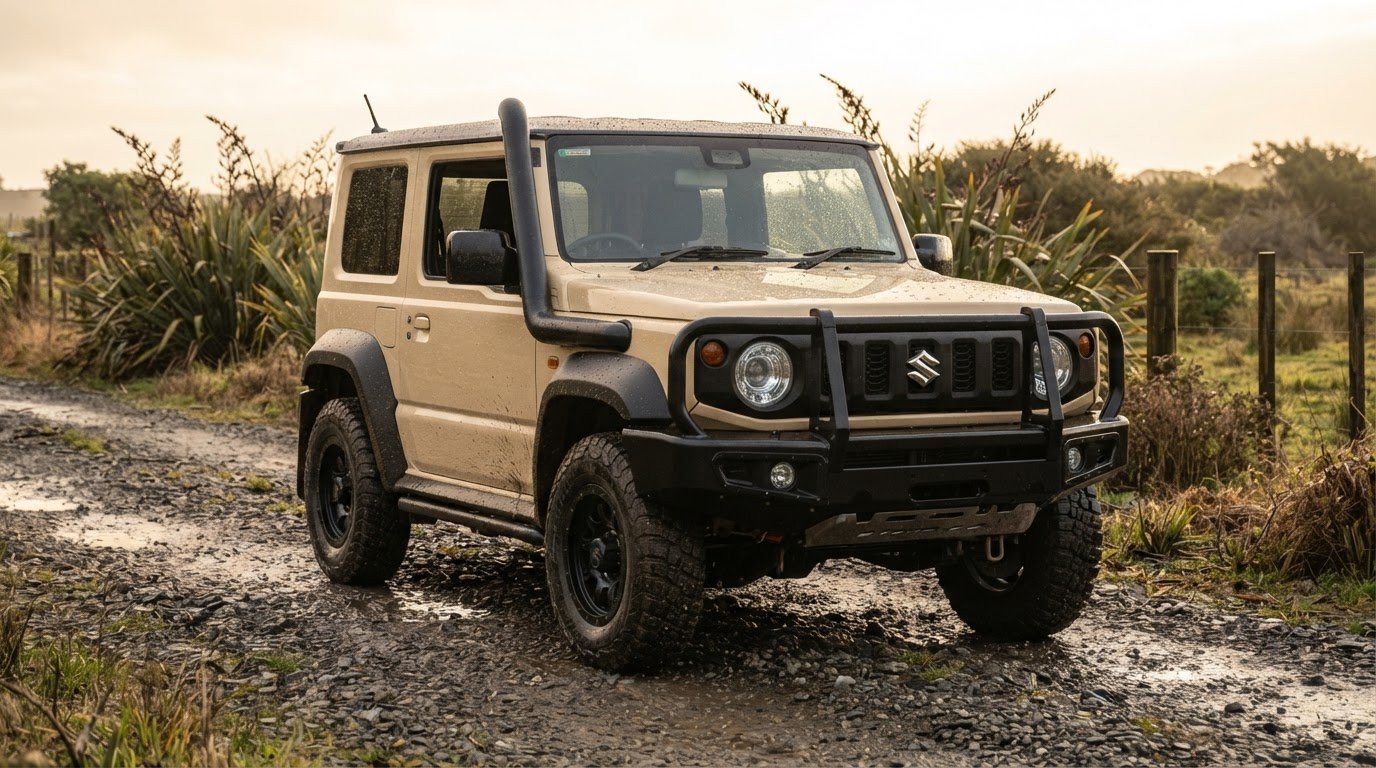
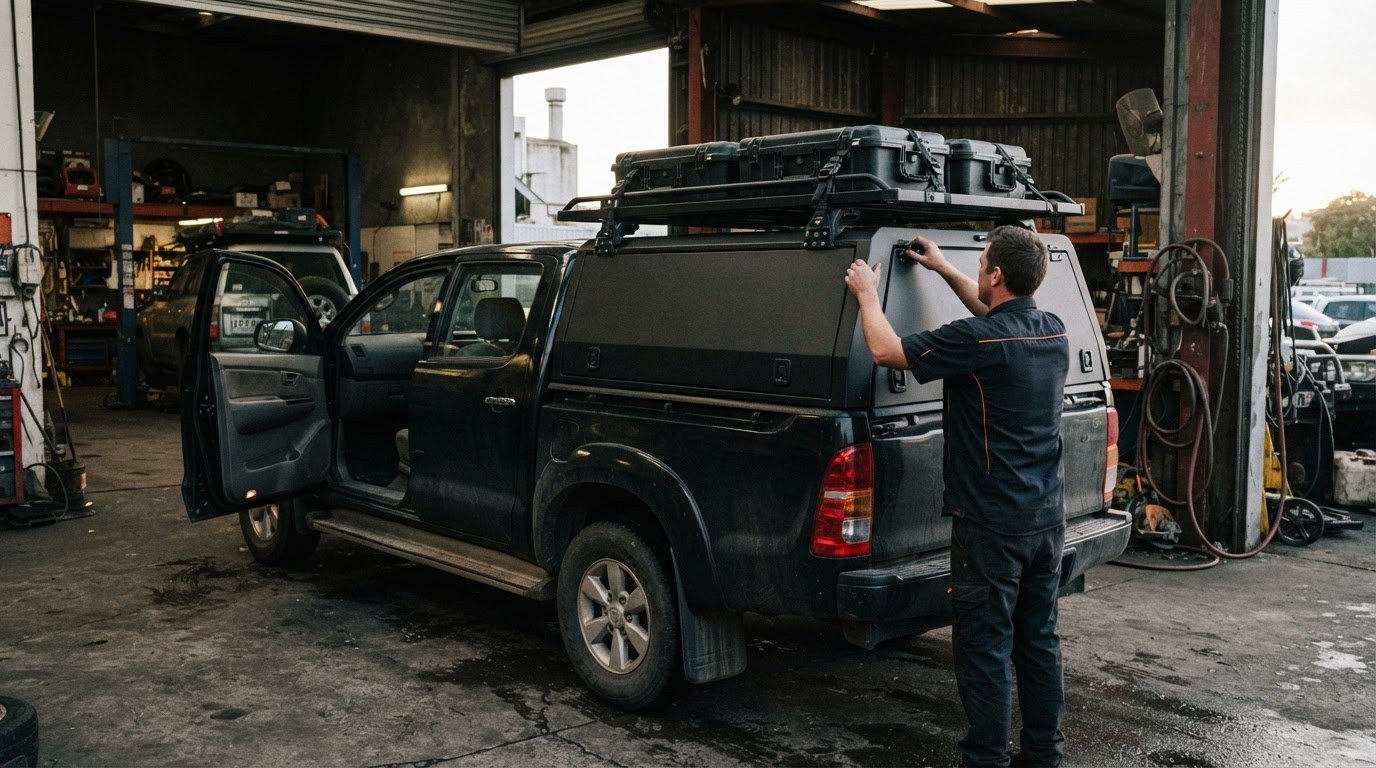
A canopy roof’s load limit changes with motion. The ute canopy weight capacity depends on the specific model and whether the vehicle is stationary or moving: the MRT dual-cab canopy, for example, is rated for up to 300 kg of static roof load and 150 kg of dynamic roof load. These figures apply to that canopy, not every ute canopy.
It’s easy to focus on the weight of the gear and overlook how it is carried. Roof racks, mounting hardware and cargo all add to the load, while the canopy’s rating is only one part of the vehicle’s overall carrying limits. Understanding the difference between static and dynamic capacity helps you assess the figures before planning a load.
This guide explains what ute canopy weight capacity means, where to find the relevant limits and how to account for roof loads. It also covers why vehicle payload and load distribution matter when setting up a ute for work or travel.
Key Takeaways
- Capacity depends on whether the ute is stationary or moving. The MRT dual-cab canopy is rated for up to 300 kg static and 150 kg dynamic roof load.
- Assess the canopy’s roof rating alongside the vehicle’s payload limit, and account for the weight of racks and mounting hardware as well as cargo.
- For the work-related vehicle FBT exemption in New Zealand, the vehicle’s gross laden weight must be 3,500 kg or less, according to Inland Revenue Department (IRD).
- If your vehicle setup needs to support a heavier load, Motortech 4X4 offers GVM Upgrades as part of its 4×4 solutions.
Ute canopy weight capacity
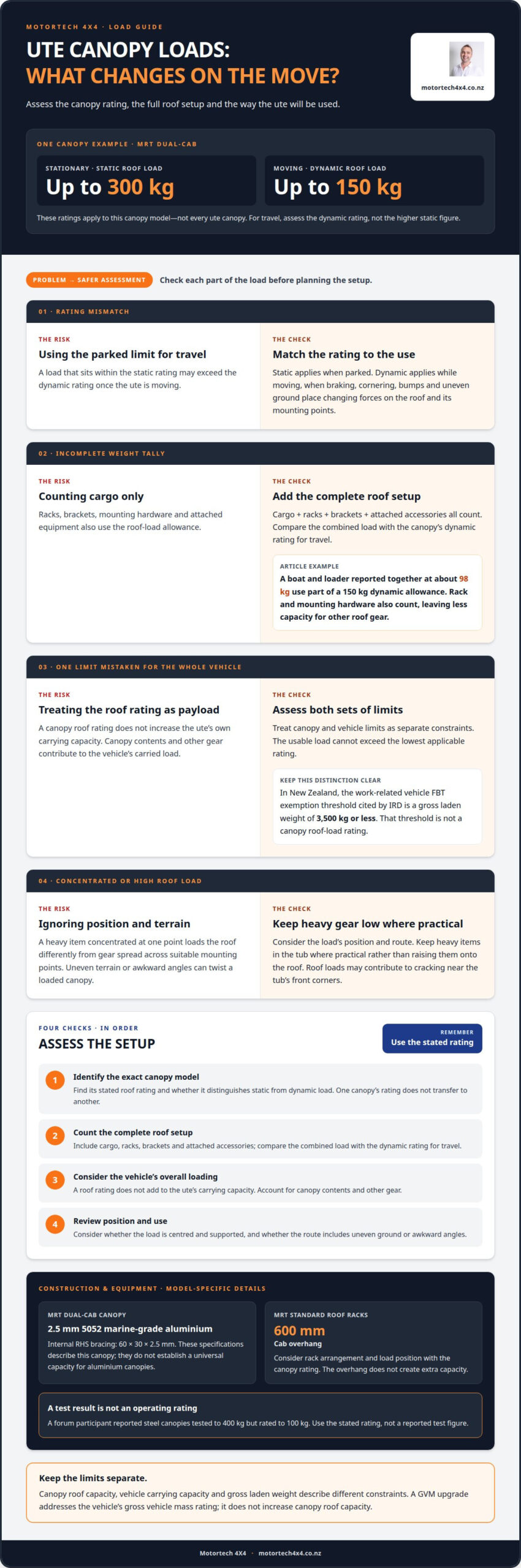
A canopy’s roof rating describes the load it can support, but the permitted load depends on whether the ute is stationary or moving. The MRT dual-cab canopy, for example, is rated to carry up to 300 kg of static weight on its roof and up to 150 kg of dynamic weight. These figures apply to that model, not every canopy. Treat the relevant canopy and vehicle limits as separate constraints: the usable load cannot exceed the lowest applicable rating. The ute canopy weight capacity figure is one part of the overall loading assessment.
Static capacity applies when the vehicle is parked. Dynamic capacity applies while it is moving, when braking, cornering, bumps and uneven ground place changing forces on the roof and its mounting points. A roof load within the static rating may exceed the dynamic rating once the ute is moving. For travel, use the dynamic figure rather than the higher stationary figure.
Work out the complete roof load, not just the cargo weight. Include racks, brackets and any other equipment attached to the canopy. For example, a boat and loader reported together at about 98 kg would use part of a 150 kg dynamic allowance; the rack and mounting hardware also count. That leaves less capacity for other roof-mounted equipment.
Load position matters as much as total mass. A heavy item concentrated at one point can stress the roof differently from a load spread across suitable mounting points. Keep heavy gear in the tub where practical instead of raising it onto the roof. On uneven terrain or at an awkward angle, a loaded canopy can twist. Roof loads may also contribute to cracking near the tub’s front corners.
Check the canopy and vehicle limits together
Use this sequence to assess a proposed load:
- Identify the exact canopy model. Find its stated roof rating and whether it distinguishes static from dynamic load. A rating for one canopy is not transferable to another.
- Count the complete roof setup. Add the cargo, racks, brackets and attached accessories. Compare that combined load with the dynamic rating for travel.
- Consider the vehicle’s overall loading. Canopy contents and other gear contribute to the vehicle’s carried load. A roof rating does not increase the ute’s own carrying capacity.
- Review the load’s position and use. A centred, supported load is different from a heavy item placed at an edge. Reconsider roof carriage when the route includes uneven ground or awkward angles.
The structure and construction explain why canopy ratings vary. The MRT dual-cab canopy uses 2.5 mm 5052 marine-grade aluminium and internal RHS bracing measuring 60 × 30 × 2.5 mm. Those specifications describe that canopy’s construction; they do not establish a universal capacity for aluminium canopies. A forum participant reported steel canopies tested to 400 kg but rated to 100 kg. A test figure is not the same as the stated operating rating, so use the rating rather than a reported test result.
Roof racks can also change where a load sits. MRT standard roof racks overhang the cab by 600 mm. An overhang may affect the load’s position and the forces acting through its supports, so the rack arrangement and canopy rating need to be considered together. Do not assume the overhang creates extra capacity. A sound ute canopy weight capacity check considers the rating, the complete rack assembly and the way the vehicle will be used.
Finally, separate roof limits from vehicle and workplace rules. For the work-related vehicle FBT exemption in New Zealand, a vehicle’s gross laden weight must be 3,500 kg or less, according to Inland Revenue Department (IRD). That threshold concerns the exemption; it is not a canopy roof-load rating. Keep the vehicle’s gross laden weight, carrying capacity and canopy rating distinct when assessing a work ute.
A forum participant advised keeping heavy loads in the tub and minimising weight on the vehicle roof or canopy racks. Another warned that loading a canopy roof could contribute to cracking at the front corners of the ute tub. These cautions reinforce the need to assess roof loads conservatively and keep heavy items low where practical.
Motortech 4X4
Motortech 4X4 can help you consider canopy loading as part of a wider vehicle setup. If added equipment or regular work loads are changing how your ute is used, its range of 4×4 solutions includes GVM Upgrades, Suspension Kits, Bullbars and Snorkels.
A GVM upgrade addresses the vehicle’s gross vehicle mass rating; it does not increase a canopy’s roof capacity. Keep these limits separate when planning modifications, and base decisions on the vehicle’s intended load and use. One upgrade does not replace the need to follow the canopy’s own rating.
Contact Motortech 4X4 to discuss your ute setup and the modifications that may suit its intended use.
Plan your ute’s next setup
Use your canopy assessment as a starting point for planning a ute around its actual work or travel needs. Map the equipment you intend to carry, where it will be fitted and how the vehicle will be used. This gives you a clearer basis for choosing suitable modifications, rather than adding accessories without considering how they work together.
The right configuration may involve more than one area. Motortech 4X4 offers Suspension Kits, Bullbars and Snorkels, alongside other 4×4 solutions. These products serve different functions, so choose according to your vehicle’s intended use and treat canopy capacity as its own design consideration. A coordinated plan helps keep each modification relevant to the way you use the ute.
If you’re planning changes and want to discuss how they fit your vehicle, contact Motortech 4X4. Take the next step with a setup shaped around your needs.